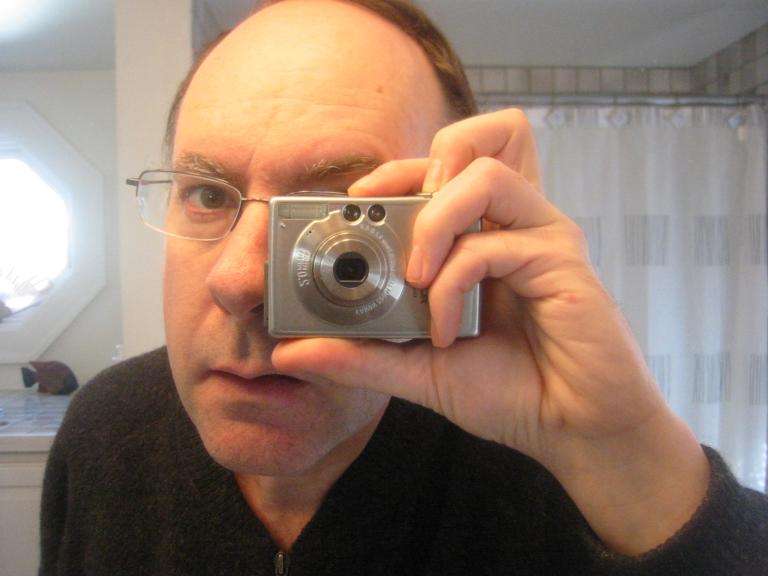
1972 to 1988: Minolta srt-101 35mm.
1988 to 1996: Olympus XA 35mm.
1997 to 2000: Olympus Stylus Epic 35mm.
2000 to 2002: Canon s100 digital.
2003 to 2006: Che-ez Splash and Canon s200.
2006: Canon sd200.
2007: Lumix fx01.
2008: Canon sd200.
2009: Canon sd1200.
2017: Canon sd1300.
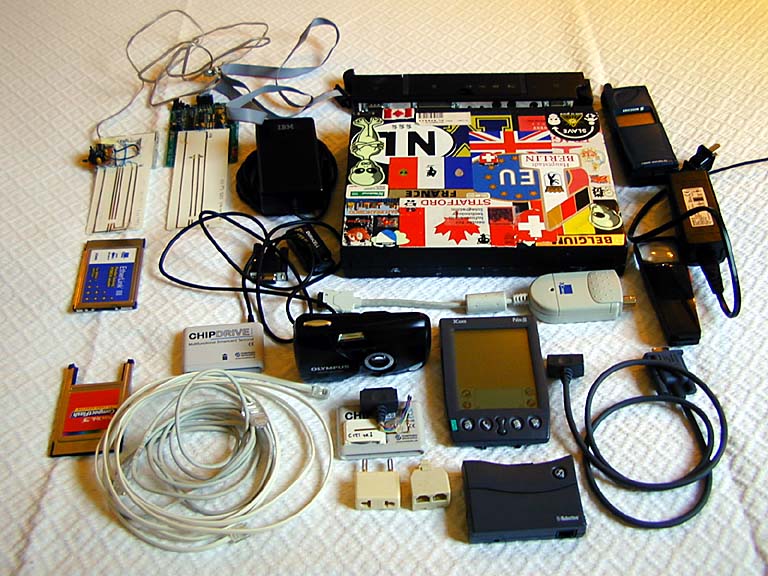
On this trip I took two cameras, one digital and one chemical. For photos that I put on my web site while traveling, I take the photo with the digital camera, put the CF card containing the images in a Windows machine (OpenBSD does not yet support cardbus devices), copy them to a dos partition, reboot OpenBSD, manipulate the images with pbmtools, and copy them to the server using ssh.
When I get home I take the film from the other camera to Ritz and have them put the images on cd-rom, then put them on my web site. I clean these up with Photoshop.
Equipment inventory for this trip:
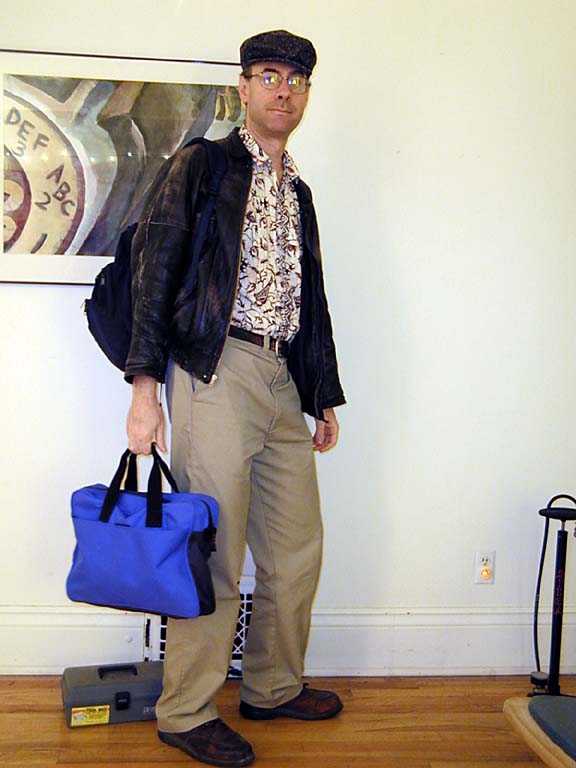
If this seems like a lot of equipment, it is. I normally travel light, and don't like to carry this much. But it does all fit in that little blue bag. All the other stuff I travel with fits in the black bag over my shoulder.
For connectivity I was depending on two new (to me) technologies. One is Merit Global Service. It almost completely failed me. The other is the modem in my digital Ericsson phone. This would have been extremely cool had it worked. My Pilot talks to the phone via infrared, no cables attached, and the phone works anywhere in the world (almost). But Omnipoint was unable or unwilling to sign us up for data service, because they and their successor, Voicestream, are both incompetent. So I was back to the old standby, calling long distance back to a modem in Ann Arbor.
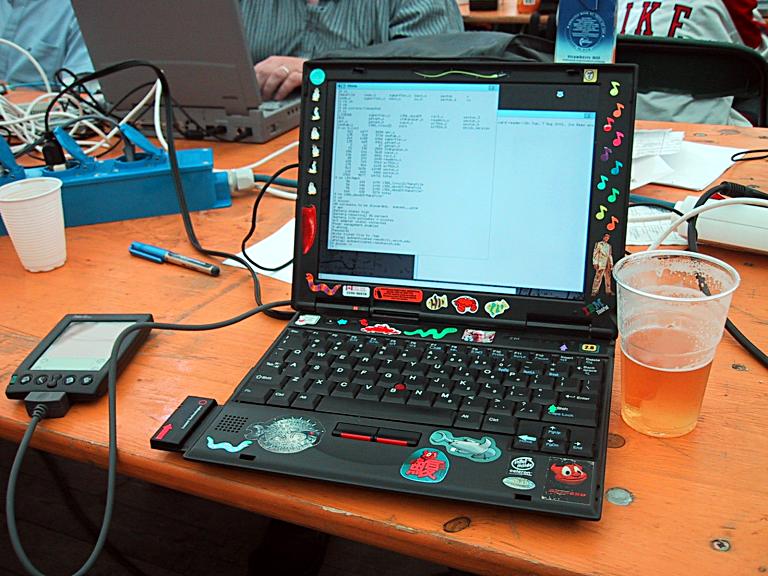
Changes include:
Still using the Thinkpad 240. Other changes:
Changes include:
I don't travel much any more. All the security theater makes it too unpleasant. Changes include:
Back to the Canon sd200. I didn't like how the Lumix did in low light. Still using a T39m, after some repairs. I've added an Asus eee pc, which is great for casual web browsing and email.
The T39m still works but I have switched to an iPhone for my new job. I still use the T39m when out of the country on vacation because the iPhone is carrier locked. I had to buy a new battery for the Thinkpad.
I replaced the Ralink card in my x40 with an Atheros because the "legacy" driver (that's the one that works) was removed from linux.
The screen cracked on my sd200. I bought a sd1200.
I don't update this page much any more partly because I'm retired now and travel just for fun, so there is no need for me to carry lots of equipment and keep it up to date. These days I bring a Toposh T163 and a Canon sd1300.
 Back to Travel and Culture.